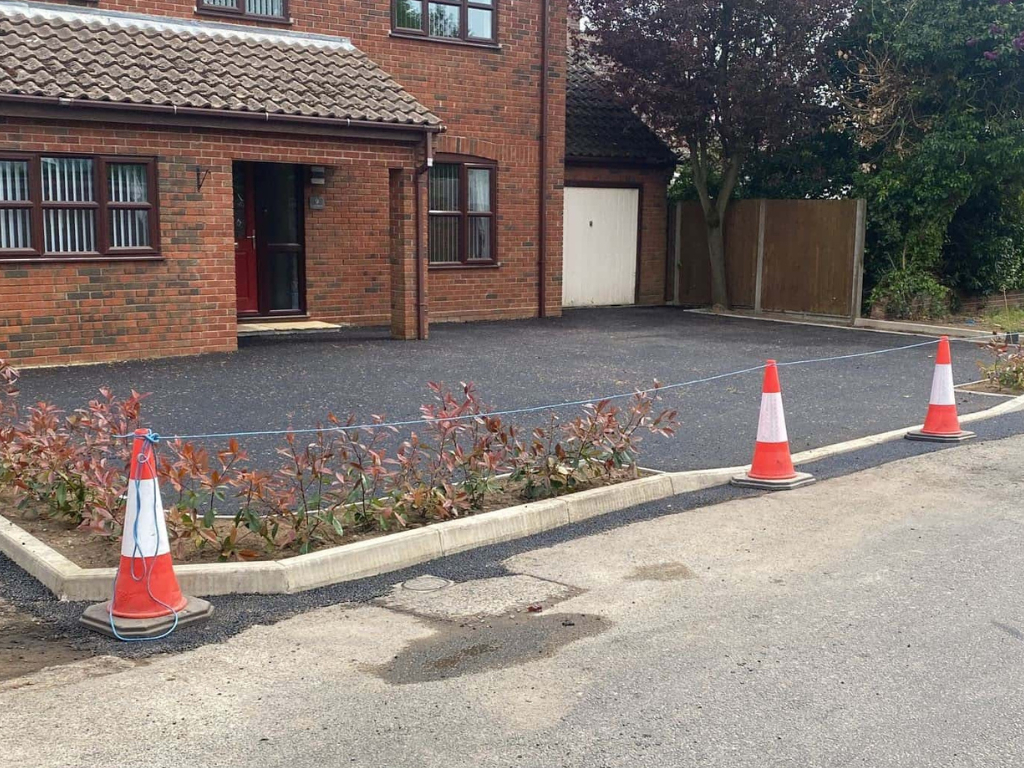
Can Tar and Chip Be Used for Garden Paths and Walkways?
Tar and chip surfacing is often associated with driveways and larger access areas, but its practical qualities can also make it a suitable option for garden paths and walkways. When properly constructed, it can create a firm, textured surface that provides dependable pedestrian access while offering a more natural-looking finish than some smoother surfacing materials.
For property owners in Bury St Edmunds, Suffolk, tar and chip can be particularly worth considering when a path needs to combine practicality with an understated appearance. However, the quality of the finished walkway depends on much more than the surface treatment itself. Preparation, levels, drainage, edging and the condition of the supporting base all influence how well the path performs.
Why Tar and Chip Can Work Well for Garden Paths and Walkways
Tar and chip surfacing is created by applying a bituminous binder to a prepared surface before distributing aggregate chippings across it. The chippings become embedded within the binder, creating a textured and durable finish.
For pedestrian areas, this construction can provide a stable alternative to loose materials while retaining a character that works naturally within many garden settings.
The suitability of tar and chip ultimately depends on the location, existing ground conditions and intended use of the path. A professional assessment helps establish whether the surface is appropriate and what preparation will be required before installation.
A Practical Surface for Regular Garden Access
A garden path is more than a decorative feature. It often provides an important route between entrances, outdoor seating areas, lawns and other frequently used parts of a property.
Where the ground is left untreated, repeated foot traffic can create worn or uneven routes. Softer areas can also become less convenient to use following periods of wet weather.
A properly constructed tar and chip walkway provides a defined, firm surface for regular movement through the garden. This can make everyday access easier while reducing reliance on an informal route across soil or grass.
Tar and Chip Creates a More Natural-Looking Finish
One of the characteristics that makes tar and chip attractive for garden paths is its textured appearance.
The exposed aggregate gives the finished surface a less uniform character than some alternative materials. This can help a walkway sit comfortably alongside lawns, planting and other garden features rather than appearing overly prominent.
The choice of aggregate also contributes to the final appearance.
A well-planned installation should consider how the path relates to the surrounding property rather than treating it as an isolated strip of surfacing.
It Provides Greater Stability Than Loose Gravel
Loose gravel is commonly associated with garden paths, but it behaves differently from tar and chip.
Because loose aggregate is not bound into the surface, individual stones can migrate through regular foot traffic. They may move towards the edges, collect in particular sections or be carried onto adjoining surfaces.
Tar and chip retains the visual texture of exposed aggregate while securing the chippings within a bituminous binder.
This creates a more stable walking surface and reduces the amount of loose material moving around under normal use.
Surface Texture Can Be Useful on Walkways
The aggregate finish creates a naturally textured surface.
For pedestrian routes, surface texture is an important practical consideration because garden paths are exposed to changing outdoor conditions throughout the year.
However, the performance of any walkway depends on more than texture alone. Correct gradients and effective drainage are equally important because water should not be allowed to accumulate unnecessarily across the path.
This is why professional path construction considers the complete surface rather than focusing solely on the material visible at the end.
The Base Beneath the Path Still Matters
A tar and chip surface cannot compensate for unstable construction underneath it.
If the supporting ground is soft, poorly compacted or affected by significant movement, those problems can eventually influence the surface above.
A dependable walkway therefore begins with appropriate preparation.
Depending on the existing conditions, this may involve establishing a suitable formation, preparing supporting material and compacting the base before the surface treatment is applied.
Although this work becomes hidden after completion, it plays a major role in determining the quality of the finished path.
Existing Paths May Sometimes Provide a Starting Point
Not every project begins with completely undeveloped ground.
A property may already have an older pathway that has become tired or unattractive while retaining a reasonably stable underlying structure. In such circumstances, the existing construction should be assessed before deciding how to proceed.
Important considerations include:
- Whether the existing base remains stable
- The presence of significant cracks or movement
- Uneven or sunken areas
- Existing drainage behaviour
- The condition of the edges
- How the path connects with surrounding surfaces
- Whether previous repairs remain sound
Where the underlying construction is unsuitable, simply covering it with a new finish is unlikely to provide the best long-term result.
Drainage Should Be Considered Before Surfacing
A successful garden path needs to manage rainfall effectively.
If levels are poorly designed, water can collect in low points or repeatedly run towards areas where it is unwanted. These problems should be addressed during preparation rather than after the finished surface has been installed.
The path may require carefully established falls to encourage water to move appropriately.
Surrounding ground conditions should also be considered because a path forms part of the wider garden rather than functioning independently from it.
Good drainage planning helps create a walkway that remains practical during changing weather conditions.
Edging Gives the Path Definition and Support
Edges play both a practical and visual role in garden path construction.
A defined boundary creates a cleaner transition between the walkway and adjoining lawns, beds or other surfaces. It can also help support the edges of the constructed path.
Without suitable consideration at the boundaries, the surrounding ground may gradually encroach onto the walkway or the edge itself may become less defined.
Professional installation considers these details from the beginning so that the finished path looks intentional and properly integrated into the garden.
Tar and Chip Can Work Well on Longer Walkways
Some properties require more than a short path between two nearby areas.
Longer walkways can benefit from a surface that creates a continuous, clearly defined route without requiring individual paving units throughout the entire area.
Tar and chip can be particularly effective where the objective is a practical pathway with a consistent appearance.
For longer routes, careful preparation becomes even more important because levels, drainage and changes in direction need to remain properly controlled across the complete length of the walkway.
Curved Garden Paths Require Careful Planning
A garden path does not always need to follow a straight line.
Curved walkways can help create a softer appearance and allow the route to follow existing garden features. Tar and chip can be used as part of such a design where the layout and supporting construction are appropriate.
The path should still be planned around practical movement.
Curves that are unnecessarily tight or inconsistent can make the walkway awkward to use, while poorly defined edges may affect the finished appearance.
Setting out the route carefully before construction helps ensure that the finished walkway is both attractive and functional.
Path Width Should Reflect How the Area Is Used
The appropriate width of a garden walkway depends on its purpose.
A secondary route that receives occasional foot traffic may have different requirements from a main path used every day. Where the walkway is expected to accommodate frequent movement or garden equipment, sufficient width becomes particularly important.
This is another reason why surfacing should be planned around how the property is actually used.
A professionally designed walkway should feel comfortable and practical rather than simply filling an available strip of ground.
Transitions Between Surfaces Need Attention
Garden paths often meet other surfaces.
A tar and chip walkway might connect with an entrance, driveway, patio or another established part of the property. These transition points should be considered carefully during installation.
Sudden changes in level or poorly finished junctions can make an otherwise well-constructed path feel incomplete.
Good preparation allows these connections to be incorporated into the overall design so that movement between surfaces feels natural.
Garden Paths Need the Same Attention to Preparation as Larger Areas
Because a walkway is smaller than a driveway, it can be tempting to assume that construction is less important.
In reality, the same fundamental principles still apply.
The ground needs to be suitable, the supporting construction needs stability, levels should be properly established and the edges require consideration. Neglecting these details simply because the surface carries pedestrians rather than vehicles can compromise the finished result.
Professional workmanship is therefore valuable even on relatively modest garden paths.
When Might Tar and Chip Not Be the Right Choice?
No surfacing material is appropriate for every property.
The existing ground, desired appearance, path layout and intended use all influence whether tar and chip is the most suitable option.
For example, an area with significant underlying instability needs that problem addressed before a surface treatment can be considered. Similarly, a homeowner seeking a very particular type of smooth or highly formal finish may have different priorities.
The purpose of a professional assessment is to determine suitability rather than recommending the same surface for every garden.
Why Professional Installation Makes a Difference
The visible tar and chip finish is only the final stage of the work.
A successful installation depends on the preparation that takes place beforehand and the consistency with which the surfacing materials are applied.
Professional installation considers:
- Ground and base condition
- Compaction
- Path dimensions
- Levels and falls
- Drainage
- Edge definition
- Connections with existing surfaces
- Consistency of the finished aggregate
Considering these elements together helps create a path that is practical as well as visually appropriate for its surroundings.
Tar and Chip Paths in Bury St Edmunds, Suffolk
At Bury St Edmunds Driveway Solutions, we understand that garden paths and walkways need to be planned around their surroundings and intended use.
Where tar and chip is suitable, careful preparation can create a firm, textured and clearly defined pedestrian surface that complements the wider outdoor space. Assessing the existing ground and establishing the correct construction beforehand are essential parts of achieving a dependable result.
For property owners in Bury St Edmunds, Suffolk, professional driveway surfacing expertise can therefore be equally valuable when creating or improving smaller access routes around the garden.
Conclusion
Tar and chip can be an effective choice for garden paths and walkways when the location and underlying construction are suitable. Its textured aggregate finish can provide a practical pedestrian surface while creating a more understated appearance that works naturally within many outdoor settings.
The quality of the finished walkway depends on proper preparation. A stable base, appropriate levels, effective drainage, defined edges and carefully planned transitions all contribute to how well the surface performs.
If you are considering a tar and chip garden path or walkway at your property in Bury St Edmunds, Suffolk, contact Bury St Edmunds Driveway Solutions. We can assess the area and recommend an appropriate surfacing approach based on the condition, layout and intended use of the path.
Call us on: 01284 331 496
Click here to find out more about Bury St Edmunds Driveway Solutions
Click here to complete our contact form and see how we can help with your driveway needs.